
Page Contents
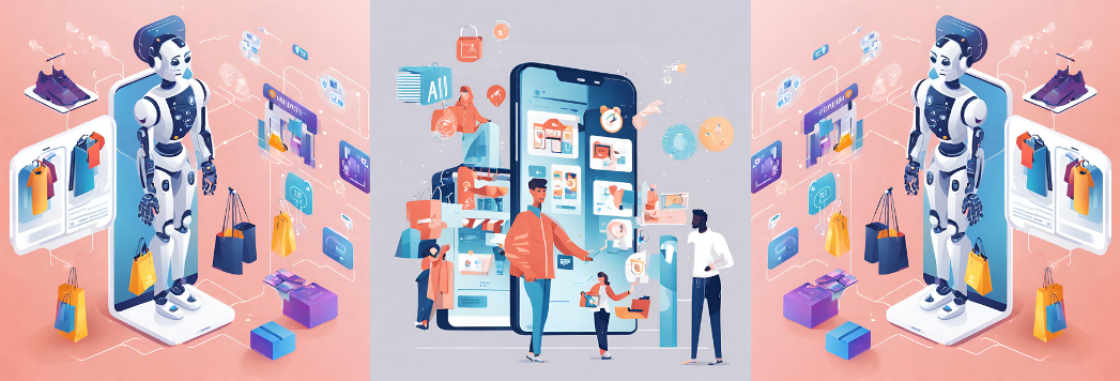
ToggleArtificial intelligence has dramatically changed the ecommerce industry, thereby enhancing customer experience, optimizing business operations, and improving security. From personalized recommendations to fraud detection, AI-based solutions are redefining the way consumers engage with eCommerce sites. Here are some of the key examples of AI in ecommerce that show the impact on the various aspects of the industry.
Personalization and Recommendation Systems
Customer behaviour, purchase history, and web surfing are tracked and analyzed using AI-driven recommendation systems. As a result, such systems boost the sales for the businesses with the relevant suggestions on products or content.
Amazon’s Product Recommendations
Amazon utilizes AI algorithms, which are applied to assess the preferences of the customers and deliver relevant products in order to maximize the chances of purchase based on past purchases, search history, and customer behavior. Such an approach, fueled by AI, has significantly contributed to the platform’s revenue due to the improved rate of customer engagement and retention.
Netflix’s Content Recommendations
Although basically a streaming service, Netflix is most apt to illustrate the capabilities that AI-driven personalization brings forth. Its recommendation engine assesses viewing history, ratings, and user interactions to suggest the right content corresponding to individual preferences. This approach helps engage users, reduces churn rates, and increases satisfaction levels for its customers.
Customer Service and Support
AI chatbots and virtual assistants make customer support much more efficient, as they give instant responses to queries and can help in product selection. Solutions like these help improve user experience while reducing human intervention.
Sephora’s Virtual Assistant
Sephora has an AI-based virtual assistant which helps customers search for beauty products according to their preferences. A chatbot providing makeup and skincare recommendations based on user inputs enhances the shopping experience. It further helps in tutorial and review support for products that enhance customer confidence in their purchases.
IKEA’s Chatbot for Product Information
With these AI-powered chatbots, customers can find whatever furniture and decorations they need using IKEA services. The provided information includes what the product contains, its available quantity, as well as self-assembly steps. This leads to the increased efficiency of consumer inquiries while managing support services effectively.
Dynamic Pricing and Inventory Management
AI optimizes business pricing and inventory levels. With the help of demand analysis, market trend data, and competitor price movements, AI ensures maximum profit for retailers through proper sales and minimal stock problems.
Walmart’s Dynamic Pricing Strategy
Walmart implements AI-driven dynamic pricing, changing the products’ prices according to the demand and competitors. This is meant to ensure a competitive price but with maximized profits. The AI will always compare prices and regulate the changes dynamically.
Stitch Fix’s Inventory Management
With predictions regarding the current season’s fad and trends obtained from customer preferences, Stich Fix can be able to take AI inventory management decisions. Its approach makes a correct product at a particular point so that overstocking may be prevented as well as guarantee an efficient level of inventory.
Fraud Detection and Security
Ecommerce companies get protected through security solutions enabled through AI against fraud transactions and other cyber attacks, and thus risk is minimized to ensure security measures are maintained towards customer data.
Shopify’s Fraud Prevention
Shopify integrates AI-powered fraud detection tools to ensure merchants are safeguarded from fraudulent activities. This tool analyzes patterns of transactions, flags suspicious orders, and even gives risk assessments. With AI, Shopify assures secure transactions while minimizing chargebacks and financial loss.
PayPal’s Risk Management
The security of transactions for PayPal increases using AI algorithms for fraud transaction detection and further securing transactions. This system scans for any transaction behavior with weird patterns indicating fraud. Therefore, with PayPal having a capacity for risk-based assessment real-time in an AI manner, the online financial transactions remain low threat-based to occur.
Conclusion
It has reformed all perspectives of eCommerce starting from personalized suggestions to fraud prevention. Businesses can now leverage the power of AI-driven solutions towards enhancing customer experiences, improving operation efficiency, and ensuring secure transaction processes. Therefore, with increased speed in innovation, AI shall impact eCommerce positively, and the need for embracing it will arise as a need for growth and innovation. It is evident by the examples of AI in ecommerce is changing online retailing today.
Power of Telegram Bots for E-commerce | Transforming Ecommerce with Artificial Intelligence | How Shopping Bots Boost Business Growth


